We Use CookiesWe use cookies to enhance the security, performance, functionality and for analytical and promotional activities. By continuing to browse this site you are agreeing to our privacy policy

10 Best Xlr Microphones 2026 in the United States
How do we rank products for you?

Our technology thoroughly searches through the online shopping world, reviewing hundreds of sites. We then process and analyze this information, updating in real-time to bring you the latest top-rated products. This way, you always get the best and most current options available.

headphones-stars

Our Top Picks

#1

Winner

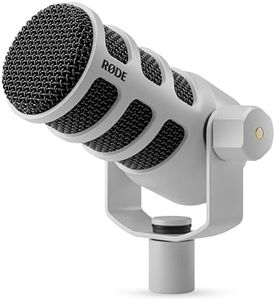
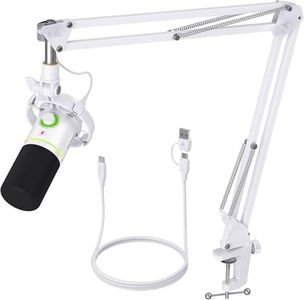
RØDE PodMic USB Dynamic Broadcast Microphone with XLR and USB Connectivity for Podcasting, Streaming and Content Creation (White)

Rating
10.0
Chosen by1,461
Frequency Response

Most important from
8042 reviews

Frequency Response
Produces a clear and bass-rich sound to your voice, making every recording sound professional.

The RØDE PodMic USB Dynamic Broadcast Microphone offers a blend of traditional and modern connectivity with both XLR and USB-C options, making it versatile for various recording setups. This feature is particularly beneficial for podcasters, streamers, and content creators who may need to switch between different devices easily. Dynamic microphones typically have a cardioid pattern, which is good for focusing on sound from one direction and reducing background noise, a plus for recording in less-than-ideal environments.

RØDE microphones usually offer a broad and flat response, ensuring the capture of a natural and clear voice reproduction. The robust all-metal construction and internal shock mount make it durable and resistant to handling noise, while the built-in and external pop filters effectively manage plosive sounds, ensuring clear audio. The integrated DSP effects available through the RØDE Central app, including APHEX Aural Exciter and Big Bottom processors, add value by allowing users to enhance their recordings easily.

The zero-latency headphone monitoring feature with dedicated volume control is a valuable addition for real-time audio feedback. However, at nearly 2 pounds, it is relatively heavy for a handheld mic, which could be a drawback for some users. This microphone is well-suited for podcasters, streamers, and content creators looking for a reliable and versatile recording solution.

Rating
10.0
Chosen by1,461
Frequency Response

Most important from
8042 reviews

Frequency Response
Produces a clear and bass-rich sound to your voice, making every recording sound professional.
#2

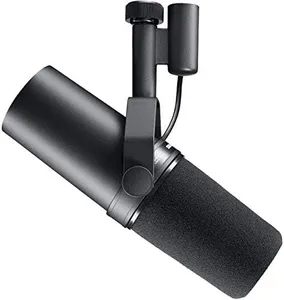
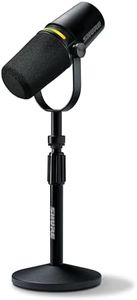
Shure SM7B Vocal Dynamic Microphone – XLR Studio Mic for Podcasting, Recording, Broadcasting, Streaming & Gaming – Smooth, Warm Sound, Rugged Build, Detachable Windscreen, Wide Frequency Range, Black

Rating
9.4
Build Quality

Most important from
12677 reviews

Build Quality
Build quality... state of the art. It's a hefty microphone, but every bit of the weight is intentional.

The Shure SM7B microphone is a highly versatile dynamic mic known for its exceptional quality in various audio settings including studio recording, podcasting, and streaming. Its unidirectional polar pattern effectively minimizes background noise, which is a significant advantage for users who want clear vocal capture without interference. The wide frequency response ensures natural sound reproduction, making it trusted by many professionals in the industry. Additionally, the rugged construction and detachable windscreen enhance its durability, which is important for both studio setups and mobile uses.

The SM7B requires a high gain setting (at least 60dB) to achieve its optimal performance, which may necessitate an additional preamp for users who don’t already have one. This could add to the cost for beginners. While the microphone doesn’t require phantom power, some users may find it limiting if they wish to use it in configurations that typically require phantom power.

The self-noise level is relatively low, making it suitable for professional recordings, but the microphone can be sensitive to plosives, which means careful positioning is key to avoid unwanted sounds. Despite these minor drawbacks, the Shure SM7B remains a top choice for those seeking quality and reliability in their audio equipment. Its balance of features makes it particularly beneficial for vocalists, podcasters, and streamers looking for a dependable microphone that delivers rich, warm sound.

Rating
9.4
Build Quality

Most important from
12677 reviews

Build Quality
Build quality... state of the art. It's a hefty microphone, but every bit of the weight is intentional.
#3

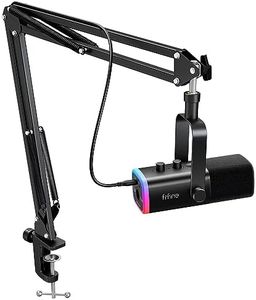
FIFINE XLR/USB Gaming Microphone Set, Dynamic PC Mic for Streaming Podcasting, Computer RGB Mic Kit with Boom Arm Stand, Mute Button, Headphones Jack, for Recording Vocal Voice-Over-AmpliGame AM8T

Rating
9.4
Polar Pattern
Build Quality

Most important from
4671 reviews

Polar Pattern
The cardioid polar pattern effectively minimizes background noise, making it perfect for clear voice recordings.
Build Quality
The build quality is impressive; the microphone feels solid and high-end despite its affordable cost.

The FIFINE XLR/USB Gaming Microphone Set, model AMPLIGAME AM8T, is designed for gamers, streamers, and podcasters. One of its major strengths is its versatility in connectivity, offering both USB for simple plug-and-play use with PCs and XLR for more professional setups with mixers or sound cards. This makes it adaptable to different recording environments and needs. The customizable RGB lighting adds a vibrant touch to any gaming setup, which can be easily controlled with a simple tap.

The cardioid polar pattern and -50dB sensitivity help in focusing on your voice while minimizing background noise, which is essential for clear voice recordings and streams. The boom arm stand included in the kit is both durable and adjustable, providing stable support for the microphone during use. Additional features like the mute button, gain knob, and real-time monitoring through the headphone jack add to the convenience and control, making it easier to achieve high-quality recordings.

The build combines sturdy metal and ABS plastic, ensuring durability. This microphone kit is particularly well-suited for gamers and streamers who require reliable performance and ease of use. Despite minor drawbacks, the FIFINE AMPLIGAME AM8T offers a robust solution for high-quality audio recording and streaming.

Rating
9.4
Polar Pattern
Build Quality

Most important from
4671 reviews

Polar Pattern
The cardioid polar pattern effectively minimizes background noise, making it perfect for clear voice recordings.
Build Quality
The build quality is impressive; the microphone feels solid and high-end despite its affordable cost.

Buying Guide for the Best Xlr Microphones

Choosing the right XLR microphone can significantly impact the quality of your audio recordings, whether you're a musician, podcaster, or content creator. XLR microphones are known for their professional-grade sound quality and durability. To make an informed decision, it's important to understand the key specifications and how they align with your specific needs. Here are the main specs to consider when selecting an XLR microphone.
Polar PatternThe polar pattern of a microphone describes how it picks up sound from different directions. Common polar patterns include cardioid, omnidirectional, and bidirectional. Cardioid microphones pick up sound primarily from the front, making them ideal for solo recordings or live performances where you want to minimize background noise. Omnidirectional microphones capture sound equally from all directions, which is useful for recording group discussions or ambient sounds. Bidirectional microphones pick up sound from the front and back, making them suitable for interviews or duet performances. Choose a polar pattern based on the environment and type of recording you plan to do.
Frequency ResponseFrequency response refers to the range of frequencies a microphone can capture. It is usually represented in Hertz (Hz) and indicates how well the microphone can reproduce low, mid, and high frequencies. A flat frequency response is ideal for studio recordings as it captures sound accurately without coloration. For vocals, a microphone with a slight boost in the mid-range frequencies can enhance clarity. If you're recording instruments, consider a microphone with a frequency response that complements the specific instrument. Understanding the type of sound you want to capture will help you choose the right frequency response.
SensitivitySensitivity measures how effectively a microphone converts sound into an electrical signal, usually expressed in millivolts per Pascal (mV/Pa). High-sensitivity microphones are better at capturing quiet sounds and are ideal for studio environments where subtle details are important. Low-sensitivity microphones are more suited for loud sound sources, such as live performances or recording loud instruments like drums. Consider the typical volume of the sound sources you will be recording to determine the appropriate sensitivity level for your needs.
ImpedanceImpedance is the resistance a microphone offers to the flow of electrical current, measured in ohms (Ω). Low-impedance microphones (less than 600 ohms) are generally preferred for professional audio applications because they offer better signal quality and are less susceptible to noise and interference. High-impedance microphones (greater than 1,000 ohms) are more common in consumer-grade equipment. For the best audio quality, especially in professional settings, opt for a low-impedance microphone.
Build QualityThe build quality of a microphone affects its durability and longevity. Professional-grade XLR microphones are often constructed with robust materials like metal, which can withstand the rigors of frequent use and transportation. Consider the environment in which you will be using the microphone. If you need a microphone for studio use, a less rugged build may suffice. However, for live performances or field recordings, a microphone with a sturdy build is essential to ensure it can handle the demands of such settings.
Self-NoiseSelf-noise, also known as equivalent noise level, is the inherent noise a microphone produces when no external sound is present, measured in decibels (dB). Lower self-noise levels are crucial for recording quiet sources or capturing subtle details in a studio environment. A microphone with a self-noise level below 20 dB is considered excellent for professional recordings. If you are recording in a controlled, quiet environment, prioritize a microphone with low self-noise to ensure the highest audio fidelity.

FAQ