10 Best Rv House Batteries 2026 in the United States

Related Products
Recommended lists



Our technology thoroughly searches through the online shopping world, reviewing hundreds of sites. We then process and analyze this information, updating in real-time to bring you the latest top-rated products. This way, you always get the best and most current options available.

Our Top Picks
Winner
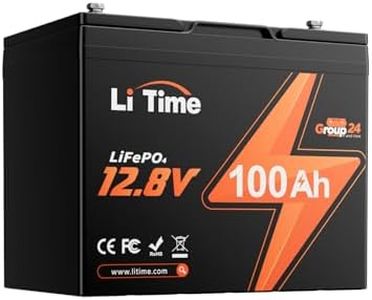
LiTime 12V 100Ah RV LiFePO4 Battery, 12 Volt Group 24 Lithium Battery, Up to 15000 Deep Cycles, Built-in 100A BMS, 1280Wh for Camper, Trailer, Off-Grid, Solar, Trolling Motor, Home Energy (2-Pack)
Most important from
2578 reviews
The LiTime 2 Pack 12V 100Ah RV Lithium Battery is a solid choice for those looking for reliable power solutions for RVs, boats, and solar systems. One of its standout features is its impressive cycle life, boasting over 4,000 cycles and a 10-year service life, which translates to long-term savings and reduced replacement frequency. At 21 pounds, it's lighter than traditional AGM batteries, making it easier to handle and install. Its higher energy density means it offers more power in a smaller size, which is a huge plus for anyone needing space optimization in their setup.
The universal fit of the Group 24 size allows for easy replacement of existing batteries without complex wiring or additional modifications. Users looking to expand their energy storage will appreciate the ability to connect multiple units, expanding from 1.28kWh to a maximum of 20.48kWh, providing flexibility for diverse power needs.
While the battery is designed with advanced safety features, it does require care in handling, particularly due to its weight and packaging upon delivery. Additionally, it’s worth noting that this battery isn't meant for starting engines or use in golf carts, which could limit its versatility for some users. Furthermore, the initial investment might be higher than traditional lead-acid batteries, but this cost is offset by its longevity and performance benefits.
Most important from
2578 reviews
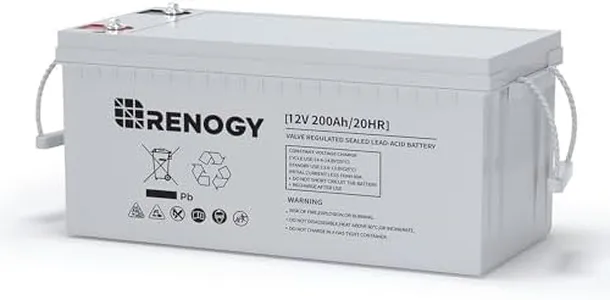
Renogy Deep Cycle AGM Battery 12 Volt 200Ah, 3% Self-Discharge Rate, 2000A Max Discharge Current, Safe Charge Most Home Appliances for RV, Camping, Cabin, Marine and Off-Grid System, Maintenance-Free
Most important from
3481 reviews
The Renogy Deep Cycle AGM Battery offers a robust option for those looking for a reliable power source for RVs, camping, and off-grid systems. With a capacity of 200Ah, it provides ample power storage, making it suitable for extended use without frequent recharging. The battery operates at 12 volts, which is standard for most RV applications, ensuring compatibility with typical systems.
One of its notable advantages is the low self-discharge rate of just 3%, allowing the battery to hold its charge longer when not in use compared to many flooded alternatives. Additionally, the AGM (Absorbent Glass Mat) technology means it's maintenance-free, eliminating concerns about acid leakage or the need for regular upkeep. This feature is particularly appealing for those who prefer a hassle-free experience.
The battery's ability to handle high discharge currents—up to 2000A—means it can safely power a variety of home appliances, which is ideal for RV users who may need to run multiple devices simultaneously. Its wide operating temperature range ensures reliability in various environmental conditions, notably performing well even in cold climates. However, at nearly 128 pounds, the battery is quite heavy, which could be a consideration for those with weight constraints or limited installation space. Its dimensions (20.5 x 9.4 x 8.8 inches) require sufficient space for installation, so it's essential to ensure compatibility with your RV setup. While the battery is durable and versatile, users should note the importance of installing it upright to avoid any potential issues, although side installation is permissible in certain situations.
The Renogy Deep Cycle AGM Battery is a solid choice for those needing a powerful and low-maintenance battery solution, especially for RVs and off-grid settings. Its high capacity, low self-discharge rate, and maintenance-free nature make it a convenient and efficient power source for long-term use.
Most important from
3481 reviews
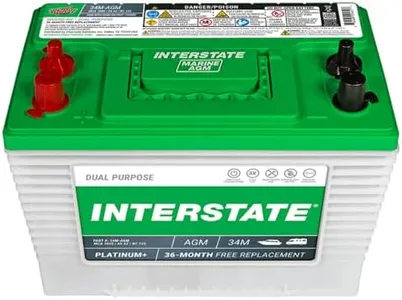
Interstate Batteries Marine/RV Battery 12V 62Ah 800CCA (34M-AGM) Dual Purpose Power Pure Lead AGM RV & Marine Starting Replacement Battery (Group Size 34M) Boats, RV's
Most important from
79 reviews
The Interstate Batteries Marine/RV Battery 12V 62Ah (Group 34M) is a dual-purpose battery designed to serve as both a starting battery and a deep-cycle power source, making it a good fit for RV owners who need reliable power for their vehicle’s motor and onboard accessories. This battery uses pure lead AGM technology, which offers a longer life—estimated at 2 to 3 times that of conventional batteries—and faster recharging. With a capacity of 62 amp-hours and a weight of about 48 pounds, it strikes a balance between power and portability, though it is on the heavier side compared to some other options.
It's built tough to handle rugged conditions and continuous discharging without significantly reducing lifespan, which is helpful for extended trips. Maintenance is minimal thanks to its sealed AGM design, which also improves safety and reduces the risk of leaks. AGM batteries typically perform well in various climates, making this battery versatile for RV use. However, the size and weight may require some consideration depending on your RV setup, and although it has good cycle life, it may come at a higher price point than standard flooded batteries.
For those seeking a dependable, low-maintenance battery capable of handling both starting and deep-cycle needs, this Interstate model represents a solid option.