We Use CookiesWe use cookies to enhance the security, performance, functionality and for analytical and promotional activities. By continuing to browse this site you are agreeing to our privacy policy

10 Best quiet PC fans 2026 in the United States
How do we rank products for you?

Our technology thoroughly searches through the online shopping world, reviewing hundreds of sites. We then process and analyze this information, updating in real-time to bring you the latest top-rated products. This way, you always get the best and most current options available.

headphones-stars

Our Top Picks

#1

Winner

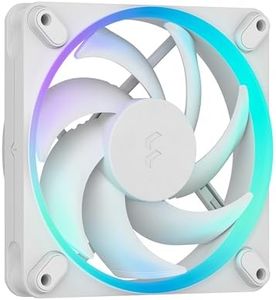
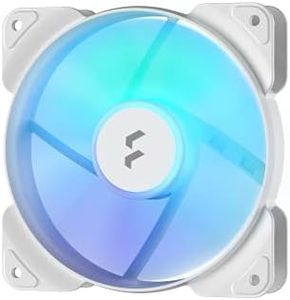
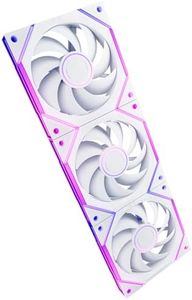
Fractal Design Momentum 12 RGB, White - Computer Fan

Rating
10.0
Chosen by1,172
Noise Level (dBA)

Most important from
5 reviews

Noise Level (dBA)
The fan operates with remarkable quietness, maintaining low noise levels even at higher speeds.

The Fractal Design Momentum 12 RGB fan is a solid choice if you want a quiet but visually appealing cooling solution for your PC. Its strong Liquid Crystal Polymer blades and swept blade design are engineered to push air efficiently while keeping noise low, with a noise level of just 28 dBA, which is quite quiet for a 120mm fan. The Fluid Dynamic Bearing with a herringbone structure helps the fan run smoothly and quietly over time, adding durability.

It supports PWM control, allowing the fan speed to adjust automatically based on your system’s temperature, and includes a Zero RPM mode, so the fan can stop spinning entirely when your PC is cool, eliminating noise completely during light use. The fan measures 120mm square and uses a SATA power connector, which is common and easy to connect. One added bonus is the customizable ARGB lighting ring, which lets you create attractive lighting effects if you want to enhance your PC’s look.

This fan is best suited for users looking to build a quiet, stylish PC with good noise control and lighting, rather than those needing extreme airflow for powerful gaming rigs or heavy overclocking.

Rating
10.0
Chosen by1,172
Noise Level (dBA)

Most important from
5 reviews

Noise Level (dBA)
The fan operates with remarkable quietness, maintaining low noise levels even at higher speeds.
#2

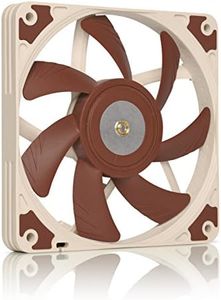
Noctua NF-A12x15 PWM, Premium Quiet Slim Fan, 4-Pin (120x15mm, Brown)

Rating
9.4
Noise Level (dBA)
Airflow (CFM)

Most important from
2750 reviews

Noise Level (dBA)
It maintains excellent cooling performance with minimal noise, remaining dead silent at idle and smooth under load without annoying sounds.
Airflow (CFM)
Despite its slim 15mm profile, the airflow and air pressure feel strong and well-focused, enhancing cooling efficiency.

The Noctua NF-A12x15 PWM is designed specifically for users who want a quiet but efficient cooling fan, especially in tight spaces like small PC builds or HTPCs. Its slim 120x15mm size makes it ideal for low-profile coolers where regular fans might not fit. With a maximum speed of 1850 RPM, it provides good airflow while keeping noise at a low 23.9 dB(A), which is quieter than many standard fans. The 4-pin PWM connector allows your computer to control the fan speed automatically, helping balance cooling needs with quiet operation.

Noctua’s advanced design features, such as Flow Acceleration Channels and Acoustic Optimization, further reduce noise while maintaining performance. The fiber-glass reinforced material means the fan is durable, and it has a long expected life of over 150,000 hours. Additionally, it comes with useful accessories like anti-vibration mounts to minimize noise from vibrations, making it a solid choice for anyone prioritizing silence.

The main downside is that this fan runs at a lower maximum speed compared to larger or thicker fans, so it might not move as much air for very high-performance cooling needs. Also, the brown color scheme is unique but might not fit all PC aesthetics. This fan performs very well for quiet PC builds where space is tight and noise reduction is important, although it may not be the best option if you require the highest airflow for heavy cooling.

Rating
9.4
Noise Level (dBA)
Airflow (CFM)

Most important from
2750 reviews

Noise Level (dBA)
It maintains excellent cooling performance with minimal noise, remaining dead silent at idle and smooth under load without annoying sounds.
Airflow (CFM)
Despite its slim 15mm profile, the airflow and air pressure feel strong and well-focused, enhancing cooling efficiency.
#3

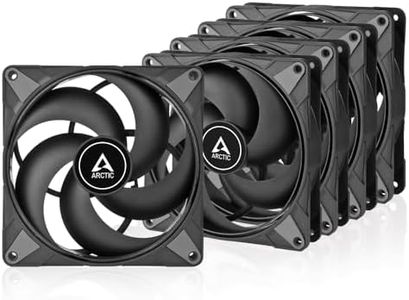
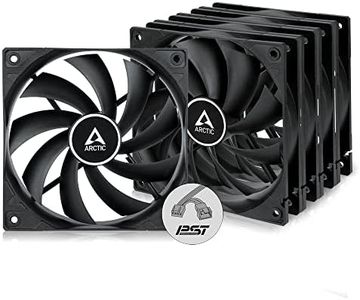
ARCTIC P14 Max (5 Pack) - PC Fans, High-Performance 140mm Case Fan, PWM controlled 400–2800 rpm, Optimised for static pressure, 0dB mode - Black

Rating
7.9
Noise Level (dBA)
Airflow (CFM)
Fan Size

Most important from
655 reviews

Noise Level (dBA)
At maximum speed, the fan can be quite loud, so effective PWM control is essential to balance noise and performance.
Airflow (CFM)
The fan delivers powerful airflow, making it ideal for cooling radiators and restricted airflow scenarios when properly tuned.
Fan Size
The 140mm size with 27mm thickness fits most cases but can be a tight fit with fan grilles, requiring some space consideration.
Bearing Type
0dB mode and fluid dynamic bearings contribute to quiet operation and durability, especially under low load.
RPM (Revolutions Per Minute)
Users appreciate the wide speed range up to 2800 RPM, offering flexibility for different cooling needs.
PWM (Pulse Width Modulation)
At maximum speed, the fan can be quite loud, so effective PWM control is essential to balance noise and performance.

The ARCTIC P14 Max fans are designed to provide strong cooling performance with a high airflow of 95 CFM and a wide speed range from 400 to 2800 RPM, which can be finely controlled using PWM. Their 140mm size fits most standard PC cases, making them versatile for users looking to improve airflow or cool heat sinks and radiators. These fans use fluid dynamic bearings, which help keep noise levels low and extend the fan's lifespan by reducing wear over time.

A notable feature is the 0dB mode, where the fan stops spinning completely under low load to eliminate noise entirely. The design includes a closed ring fan wheel that reduces vibrations even at high speeds, contributing to quieter operation. However, while the fan is optimized for static pressure and strong airflow, running at higher speeds (up to 2800 RPM) can be noisy, so noise-sensitive users might prefer to keep speeds lower.

The pack of five fans offers good value for those building or upgrading multiple cooling zones. These fans successfully balance power and quietness, especially for users needing effective cooling on components with airflow restrictions like radiators.

Rating
7.9
Noise Level (dBA)
Airflow (CFM)
Fan Size

Most important from
655 reviews

Noise Level (dBA)
At maximum speed, the fan can be quite loud, so effective PWM control is essential to balance noise and performance.
Airflow (CFM)
The fan delivers powerful airflow, making it ideal for cooling radiators and restricted airflow scenarios when properly tuned.
Fan Size
The 140mm size with 27mm thickness fits most cases but can be a tight fit with fan grilles, requiring some space consideration.
Bearing Type
0dB mode and fluid dynamic bearings contribute to quiet operation and durability, especially under low load.
RPM (Revolutions Per Minute)
Users appreciate the wide speed range up to 2800 RPM, offering flexibility for different cooling needs.
PWM (Pulse Width Modulation)
At maximum speed, the fan can be quite loud, so effective PWM control is essential to balance noise and performance.

Buying Guide for the Best quiet PC fans

Choosing the right PC fan is crucial for maintaining your computer's performance and longevity. A quiet PC fan can significantly reduce noise levels, making your workspace more comfortable and less distracting. When selecting a PC fan, it's important to consider several key specifications to ensure you get the best fit for your needs. Here are the main specs to look out for and how to navigate them.
Noise Level (dBA)The noise level of a PC fan is measured in decibels (dBA). This spec indicates how loud the fan will be when it's running. Lower dBA values mean quieter fans. Typically, fans with noise levels below 20 dBA are considered very quiet, while those between 20-30 dBA are moderately quiet. If you need a silent environment, aim for fans with noise levels under 20 dBA.
Airflow (CFM)Airflow is measured in cubic feet per minute (CFM) and indicates how much air the fan can move. Higher CFM values mean better cooling performance. For general use, a fan with 30-50 CFM is usually sufficient. For gaming or high-performance PCs, you might need fans with 50-70 CFM or more. Choose a fan with the right balance of airflow and noise level based on your cooling needs.
Fan SizePC fans come in various sizes, typically measured in millimeters (mm). Common sizes include 120mm, 140mm, and 200mm. Larger fans can move more air at lower speeds, which often results in quieter operation. However, you need to ensure the fan size is compatible with your PC case. Check your case specifications to determine the maximum fan size it can accommodate.
Bearing TypeThe bearing type affects the fan's lifespan and noise level. Common types include sleeve bearings, ball bearings, and fluid dynamic bearings (FDB). Sleeve bearings are usually quieter but have a shorter lifespan. Ball bearings are more durable but can be noisier. FDB fans offer a good balance of quiet operation and longevity. Choose a bearing type based on your preference for noise level and durability.
RPM (Revolutions Per Minute)RPM indicates how fast the fan blades spin. Higher RPMs generally mean better cooling but can also result in more noise. Fans with adjustable RPM settings allow you to balance cooling performance and noise. For a quiet PC, look for fans with lower RPMs or those that offer RPM control so you can adjust the speed as needed.
PWM (Pulse Width Modulation)PWM fans can automatically adjust their speed based on the temperature of your PC components. This feature helps maintain optimal cooling while minimizing noise. If you want a fan that can adapt to your system's needs without constant manual adjustments, look for PWM fans. They are particularly useful for maintaining a quiet environment during low-load periods.

FAQ