10 Best Powered Speakers Pair 2026 in the United States


Related Products
Up to 28% off


Recommended lists


Our technology thoroughly searches through the online shopping world, reviewing hundreds of sites. We then process and analyze this information, updating in real-time to bring you the latest top-rated products. This way, you always get the best and most current options available.

Our Top Picks
Winner
YAMAHA Hs5 Powered Studio Monitor, Pair
Most important from
377 reviews
The Yamaha HS5 Powered Studio Monitor pair is a solid choice for those in search of reliable and accurate sound reproduction in a powered speaker setup. One of its major strengths is the emphasis on sonic purity, which means these monitors deliver sound without coloring, making them ideal for music producers and audio engineers who need to hear the true mix. The 2-way bass reflex bi-amplified design with a 5-inch cone woofer and 1-inch dome tweeter offers a commendable frequency response from 54Hz to 30kHz, supported by a 70-watt power output that is quite sufficient for near-field monitoring.
Connectivity is versatile with both XLR and TRS inputs, accommodating balanced and unbalanced signals, which makes the HS5 compatible with a variety of audio equipment. The design is sleek and professional, suitable for both home studios and professional settings. However, while the 5-inch driver size is perfect for smaller spaces, it might not provide the deep bass some users might desire for larger rooms or bass-heavy genres.
In terms of drawbacks, the lack of additional built-in features like Bluetooth connectivity or an onboard equalizer may be a limitation for some users who prefer more flexible control options. Additionally, the speakers are not designed to be water-resistant, so careful placement in controlled environments is necessary. Despite these limitations, the Yamaha HS5's ability to deliver clear, unaltered sound makes it a popular choice for audio professionals, especially those focused on creating authentic mixes. With Yamaha's reputation for quality, these monitors are likely to meet the needs of anyone prioritizing sound accuracy in their studio setup.
Most important from
377 reviews
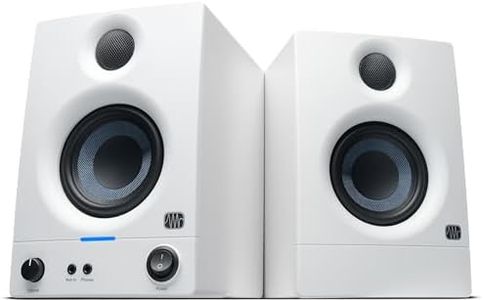
PreSonus Eris 3.5 Studio Monitors (White), Pair — 3.5" Inch Powered Bookshelf Speakers, Stereo, Desktop Computer, Near Field Music Production, Audio Mixing Recording
Most important from
5127 reviews
The PreSonus Eris 3.5 Studio Monitors are a versatile and compact pair of powered speakers ideal for near field music production. With 50 watts of Class AB dual amplification, they provide ample power for desktop setups without compromising sound clarity. The 3.5-inch woven-composite woofers ensure a tight bass response, which is particularly beneficial for music producers who need precise audio representation, while the 1-inch silk-dome tweeters enhance high-frequency clarity, offering an ultra-wide listening sweet spot. This makes them suitable for various listening angles, useful in dynamic workspace environments.
Connectivity is a strong suit for these monitors, featuring balanced ¼-inch TRS inputs and unbalanced RCA inputs, catering to both professional audio devices and consumer electronics. The front-panel ⅛-inch TRS stereo aux input further increases convenience, allowing for easy connection to common devices like smartphones and laptops.
Another notable feature is the high- and low-frequency tuning controls, enabling users to adjust the audio output to better suit their specific room conditions or personal preferences. This adaptability is a significant advantage whether the speakers are placed on a desk or a shelf. Additionally, the inclusion of a headphone output on the front panel provides flexibility for private listening sessions.
Despite these strengths, there are a few considerations to keep in mind. The speakers are not water-resistant, requiring careful placement in environments that may expose them to moisture. Additionally, while they offer Bluetooth connectivity, the option to add a subwoofer for extended low frequencies means an extra purchase is necessary for those wanting profound bass enhancement.
In terms of design, the white finish and compact dimensions (6"D x 5.5"W x 8.3"H) make these monitors aesthetically pleasing and easy to incorporate into various setups without occupying excessive space. The PreSonus Eris 3.5 speakers offer a balanced sound profile and robust connectivity, making them a commendable choice for music production and multimedia applications in home or small studio settings.
Most important from
5127 reviews
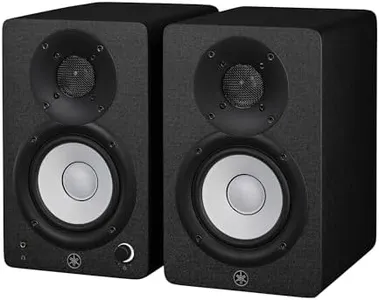
Yamaha HS4 Powered Studio Monitor in Black, Pair (HS4 B)
Most important from
1790 reviews
The Yamaha HS4 Powered Studio Monitor is a solid choice for anyone looking for reliable studio speakers, especially useful in home studios or for casual listening. With a power output of 26 watts per speaker and a frequency response of 60 Hz to 22 kHz, it delivers clear and accurate sound, making it suitable for mixing and monitoring audio. The 4.5-inch woofer and 1-inch tweeter work together to produce a balanced audio profile, which is essential for professionals who need precision in their sound.
One of the standout features is the room control and high trim response controls, allowing users to adjust the sound based on their environment, which can be a significant advantage in various room setups. The design is sleek and compact, making it an aesthetically pleasing addition to any workspace. Weighing nearly 15 pounds and measuring just under 16 inches tall, they're not too bulky, yet provide a sturdy presence on a desk.
However, there are a few drawbacks to consider. The connectivity options are somewhat limited, primarily focusing on corded electric connections; this could be a downside for those who prefer wireless options. Additionally, with a woofer size of only 4.5 inches, the bass response may not be as powerful as larger models, possibly leaving bass enthusiasts wanting more in terms of low-end performance. If you’re a musician, audio engineer, or content creator in search of precise sound reproduction for professional use, the Yamaha HS4 is a worthy option. Just be mindful of its limitations in connectivity and bass capabilities, which may not suit everyone’s needs.