We Use CookiesWe use cookies to enhance the security, performance, functionality and for analytical and promotional activities. By continuing to browse this site you are agreeing to our privacy policy

10 Best Home 3 D Printers 2025 in the United States

How do we rank products for you?

Our technology thoroughly searches through the online shopping world, reviewing hundreds of sites. We then process and analyze this information, updating in real-time to bring you the latest top-rated products. This way, you always get the best and most current options available.

headphones-stars

Our Top Picks

#1

Winner

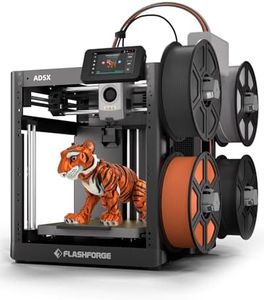
FLASHFORGE AD5X Multi-Color 3D Printer, CoreXY 600mm/s High-Speed, 1-Click Auto Leveling, 300°C Direct Drive Extruder, 220x220x220mm Build Volume, Ideal for Precision and Efficiency

Rating
10.0
Chosen by1,236
Print Volume
Print Resolution
Print Speed

Most important from
314 reviews

Print Volume
The build volume of 220x220x220mm suits most standard projects but may limit printing larger objects.
Print Resolution
Print quality is excellent for the price range, delivering detailed and reliable multi-color prints that enhance creative possibilities.
Print Speed
Despite high speeds, the printer maintains good print quality and supports a wide range of filaments, including flexible and specialty types.
Filament Compatibility
Filament compatibility issues arise with dry boxes, making it challenging to manage humidity-sensitive filaments in certain environments.
Bed Leveling
The 1-Click Auto Leveling and multi-color printing options offer hassle-free calibration and impressive versatility right out of the box.
Connectivity
The intuitive LCD touchscreen and easy WiFi connectivity make setup and operation straightforward, especially for beginners.
Software Compatibility
The touchscreen interface can be unresponsive or difficult to navigate for some, impacting ease of use.

The FLASHFORGE AD5X is a solid choice for home users interested in multi-color 3D printing with a decent build volume of 220x220x220mm, which suits most standard projects. One of its standout features is the ability to print with up to 4 colors simultaneously, adding impressive creative flexibility. The 1-Click Auto Leveling makes bed calibration simple, which is great for beginners or those who want hassle-free setup. Its print speed is notably high, reaching up to 600mm/s thanks to the Core XY design, making it one of the faster options in its class. This speed doesn’t seem to compromise quality thanks to a direct-drive extruder that can heat up to 300°C, supporting a wide range of filaments including some flexible and specialty types.

The printer comes with multiple nozzle sizes, allowing choices between finer detail and faster prints. Connectivity options include remote monitoring and control via a mobile app, adding convenience for home use. However, the 220mm build volume might be limiting if you plan to print larger objects. Also, while the printer offers advanced features like vibration compensation and power-loss resume, the relatively large weight and metal frame mean it’s less portable or compact compared to some other home models.

Flashforge printers typically support popular slicing software, which should be user-friendly. The AD5X balances speed, multi-color capability, and quality well, making it suitable for hobbyists and enthusiasts who want efficient and versatile printing at home.

Rating
10.0
Chosen by1,236
Print Volume
Print Resolution
Print Speed

Most important from
314 reviews

Print Volume
The build volume of 220x220x220mm suits most standard projects but may limit printing larger objects.
Print Resolution
Print quality is excellent for the price range, delivering detailed and reliable multi-color prints that enhance creative possibilities.
Print Speed
Despite high speeds, the printer maintains good print quality and supports a wide range of filaments, including flexible and specialty types.
Filament Compatibility
Filament compatibility issues arise with dry boxes, making it challenging to manage humidity-sensitive filaments in certain environments.
Bed Leveling
The 1-Click Auto Leveling and multi-color printing options offer hassle-free calibration and impressive versatility right out of the box.
Connectivity
The intuitive LCD touchscreen and easy WiFi connectivity make setup and operation straightforward, especially for beginners.
Software Compatibility
The touchscreen interface can be unresponsive or difficult to navigate for some, impacting ease of use.
#2

ELEGOO Centauri Carbon 3D Printer, CoreXY 500mm/s High Speed Printing with Auto Calibration, 320°C Nozzle and Built-in Camera, Ready to Print Out of The Box, 256x256x256mm Printing Size

Rating
8.8
Print Resolution
Print Speed
Filament Compatibility

Most important from
303 reviews

Print Resolution
The printer is incredibly easy to use, allowing first prints within an hour of setup with beautiful, detailed results.
Print Speed
Its speed is impressive, producing quality prints quickly without sacrificing detail.
Filament Compatibility
The enclosed design supports printing with materials like ABS and PA, expanding filament options for durable parts.
Bed Leveling
Auto bed leveling with nozzle touch ensures perfect first layers every time, simplifying calibration for beginners.
Connectivity
WiFi connectivity and a built-in camera make remote monitoring and print management seamless and convenient.
Software Compatibility
The slicer software is feature-rich, though it may require a capable computer to handle complex models smoothly.

The ELEGOO Centauri Carbon is a strong choice for home 3D printing, especially if you want a machine that’s ready to use right out of the box without complicated setup. It offers a decent print volume of 256x256x256 mm, which is large enough for many everyday projects. Its standout feature is speed — with the CoreXY design, it reaches up to 500 mm/s, making it much faster than many other home printers. This is great for quickly producing detailed parts.

The 320°C nozzle allows printing with advanced filaments like carbon fiber blends, which are useful if you want durable, heat-resistant prints. The printer’s solid aluminum frame helps keep prints stable and accurate even at those high speeds, and the auto bed leveling simplifies setup by making sure the print bed is perfectly calibrated every time. The inclusion of a touchscreen and built-in camera for monitoring prints remotely is a nice convenience feature.

On the downside, while fast speeds are attractive, printing at maximum speed can sometimes affect print quality, especially for beginners. The printer’s weight and size mean it will take a good amount of space on your desk. Also, some users might find the advanced filament options require a bit of learning to get right. The Centauri Carbon suits hobbyists and makers who want quick, reliable prints with the ability to experiment with tougher materials, though absolute beginners might need some patience to master all its features.

Rating
8.8
Print Resolution
Print Speed
Filament Compatibility

Most important from
303 reviews

Print Resolution
The printer is incredibly easy to use, allowing first prints within an hour of setup with beautiful, detailed results.
Print Speed
Its speed is impressive, producing quality prints quickly without sacrificing detail.
Filament Compatibility
The enclosed design supports printing with materials like ABS and PA, expanding filament options for durable parts.
Bed Leveling
Auto bed leveling with nozzle touch ensures perfect first layers every time, simplifying calibration for beginners.
Connectivity
WiFi connectivity and a built-in camera make remote monitoring and print management seamless and convenient.
Software Compatibility
The slicer software is feature-rich, though it may require a capable computer to handle complex models smoothly.
#3

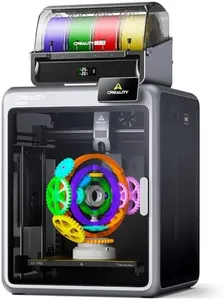
Creality K2 Plus Combo 3D Printer, Multi Color Printing with New CFS, Max 600mm/s Printing Speed, Full-auto Leveling, Next-Gen Direct Drive Extruder, Dual Al Camera, 350 * 350 * 350mm (K2 Plus Combo)

Rating
8.2
Print Volume
Print Resolution
Print Speed

Most important from
117 reviews

Print Volume
Upgrading from previous models brings a significant boost in build volume and speed, delivering print quality comparable to high-end professional machines.
Print Resolution
Upgrading from previous models brings a significant boost in build volume and speed, delivering print quality comparable to high-end professional machines.
Print Speed
Upgrading from previous models brings a significant boost in build volume and speed, delivering print quality comparable to high-end professional machines.
Filament Compatibility
Once fully operational, the printer offers reliable multi-material and multi-color printing, fulfilling its promise for enthusiasts willing to invest time in setup.
Bed Leveling
Automatic bed leveling and sturdy metal frame ensure stable, accurate prints that minimize common errors like layer shifts.
Connectivity
Remote printing functionality works well, but maintaining airflow during extended prints can prevent overheating and unexpected shutdowns.

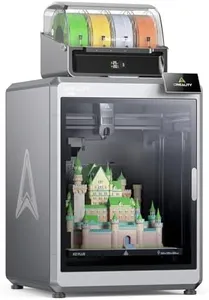
The Creality K2 Plus Combo is a good fit for home users looking to explore multi-color 3D printing without the hassle of painting their models afterward. It supports up to 16 colors by connecting multiple Creality Filament Systems (CFS), which is a standout feature for home printers. The build volume of 350 x 350 x 350 mm is quite generous, allowing for reasonably large prints. Speed is another plus here, with a maximum print speed up to 600 mm/s and fast acceleration, making it quicker than many other home 3D printers.

The printer handles a wide range of filaments, including PLA, ABS, PETG, and several carbon fiber blends, thanks to its heated chamber and high-temp nozzle, giving users flexibility in materials. Bed leveling is fully automatic and precise, using dual motorized Z-axes and sensors to ensure the print surface is perfectly flat without manual work, which helps beginners avoid common print failures. Dual AI cameras monitor prints for issues like filament jams and even create time-lapse videos, adding useful monitoring capabilities.

The sturdy metal frame with dual Z-axis support keeps prints steady and accurate, reducing errors like layer shifts. At nearly 118 pounds and with a sizable footprint, it’s quite bulky and may require a dedicated space. This printer is well suited for enthusiasts who want multi-material and multi-color printing capabilities with high speed and quality, but it might be overwhelming or unnecessary for casual hobbyists who print less frequently or smaller items.

Rating
8.2
Print Volume
Print Resolution
Print Speed

Most important from
117 reviews

Print Volume
Upgrading from previous models brings a significant boost in build volume and speed, delivering print quality comparable to high-end professional machines.
Print Resolution
Upgrading from previous models brings a significant boost in build volume and speed, delivering print quality comparable to high-end professional machines.
Print Speed
Upgrading from previous models brings a significant boost in build volume and speed, delivering print quality comparable to high-end professional machines.
Filament Compatibility
Once fully operational, the printer offers reliable multi-material and multi-color printing, fulfilling its promise for enthusiasts willing to invest time in setup.
Bed Leveling
Automatic bed leveling and sturdy metal frame ensure stable, accurate prints that minimize common errors like layer shifts.
Connectivity
Remote printing functionality works well, but maintaining airflow during extended prints can prevent overheating and unexpected shutdowns.

Buying Guide for the Best Home 3 D Printers

Choosing the right home 3D printer can be a bit overwhelming, but understanding the key specifications can help you make an informed decision. A 3D printer can be a fantastic tool for creating prototypes, models, and even functional parts. To find the best fit for your needs, consider what you plan to print, how often you'll use the printer, and your level of experience with 3D printing technology.
Print VolumePrint volume refers to the maximum size of an object that the 3D printer can produce. This is important because it determines the scale of your projects. If you plan to print small items like miniatures or small parts, a printer with a smaller print volume will suffice. However, if you want to create larger objects, you'll need a printer with a larger print volume. Typical segments are small (up to 150mm in each dimension), medium (150-300mm), and large (over 300mm). Choose based on the size of the items you plan to print most frequently.
Print ResolutionPrint resolution indicates the level of detail a 3D printer can achieve, measured in microns. A lower micron value means higher resolution and finer detail. This is crucial for projects requiring precision, such as intricate models or functional parts with tight tolerances. Resolutions can be divided into low (100 microns and above), medium (50-100 microns), and high (below 50 microns). If you need high detail, opt for a printer with a higher resolution. For general use or larger, less detailed prints, a lower resolution may be sufficient.
Print SpeedPrint speed measures how quickly a 3D printer can produce an object, typically in millimeters per second (mm/s). Faster print speeds can save time, especially for large or multiple prints. However, higher speeds can sometimes compromise print quality. Print speeds are generally categorized as slow (up to 50 mm/s), medium (50-100 mm/s), and fast (over 100 mm/s). If you need quick turnaround times, look for a printer with a higher speed. For detailed or high-quality prints, a slower speed may be more appropriate.
Filament CompatibilityFilament compatibility refers to the types of materials a 3D printer can use. Common filaments include PLA, ABS, PETG, and more specialized materials like TPU or nylon. This is important because different filaments have different properties, such as strength, flexibility, and temperature resistance. Basic printers often support PLA and ABS, while more advanced models can handle a wider range of materials. Consider what properties you need for your projects and choose a printer that supports those filaments.
Bed LevelingBed leveling ensures that the print bed is perfectly flat and at the correct distance from the nozzle, which is crucial for successful prints. Manual leveling requires you to adjust the bed yourself, while automatic leveling uses sensors to adjust the bed automatically. Manual leveling can be time-consuming and requires more skill, while automatic leveling is more convenient and user-friendly. If you're new to 3D printing or prefer ease of use, an automatic leveling system is a good choice. Experienced users might be comfortable with manual leveling.
ConnectivityConnectivity options determine how you can send print jobs to your 3D printer. Common options include USB, SD card, Wi-Fi, and Ethernet. This is important for convenience and flexibility in how you manage your printing tasks. USB and SD card are straightforward but require physical transfer of files. Wi-Fi and Ethernet allow for remote printing and easier integration into a networked environment. If you prefer direct and simple connections, USB or SD card will work. For more advanced setups or remote management, look for printers with Wi-Fi or Ethernet capabilities.
Software CompatibilitySoftware compatibility refers to the slicing software that prepares your 3D models for printing. This is important because the software affects the ease of use and the quality of your prints. Some printers come with proprietary software, while others are compatible with a range of third-party options. Consider the software's user interface, features, and community support. If you're a beginner, look for software that is user-friendly and well-supported. Advanced users might prefer software with more customization options and advanced features.

FAQ