We Use CookiesWe use cookies to enhance the security, performance, functionality and for analytical and promotional activities. By continuing to browse this site you are agreeing to our privacy policy

10 Best GE Generators 2025 in the United States

How do we rank products for you?

Our technology thoroughly searches through the online shopping world, reviewing hundreds of sites. We then process and analyze this information, updating in real-time to bring you the latest top-rated products. This way, you always get the best and most current options available.

headphones-stars

Our Top Picks

#1

Winner

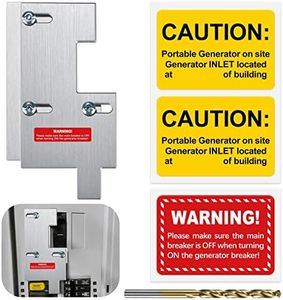
GE-200VL GE General Electric Generator Interlock Kit for Vertical Main 150 or 200 amp Breaker

Rating
10.0
Chosen by1,351
Safety Features

Most important from
206 reviews

Safety Features
Provides peace of mind by preventing dangerous back-feeding of power during outages.

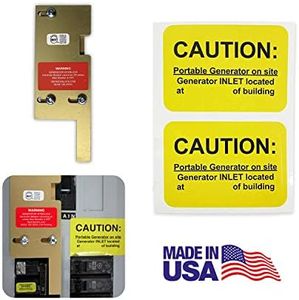
The GE-200VL GE General Electric Generator Interlock Kit is designed for those who need a reliable solution to manage power from their generator to their home electrical system. One of the main strengths of this product is its compatibility with 150 or 200 amp breakers, making it versatile for various household setups.

The inclusion of a full manufacturer warranty adds a layer of trust and peace of mind for users. Additionally, its aluminum construction ensures durability without adding much weight, as the kit itself weighs only 1 pound and measures 8 x 6 x 0.2 inches, making it easy to handle and install.

In terms of safety features, it offers the crucial role of preventing dangerous back-feeding of electricity, which can protect both users and utility workers. This interlock kit is best suited for homeowners who already own a generator and want an efficient way to integrate it into their home electrical system safely.

Rating
10.0
Chosen by1,351
Safety Features

Most important from
206 reviews

Safety Features
Provides peace of mind by preventing dangerous back-feeding of power during outages.
#2

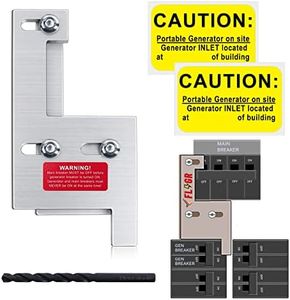
Generator Interlock for GE General Electric Single Vertical Throw Panels with 2 1/2 Inches Spacing, Brushed Nickel

Rating
10.0
Safety Features

Most important from
206 reviews

Safety Features
It effectively prevents simultaneous utility and generator power, ensuring safe operation without risk of backfeeding.

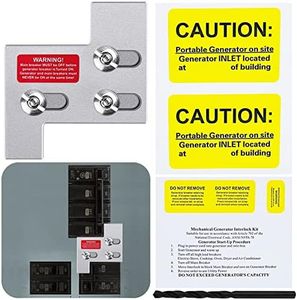
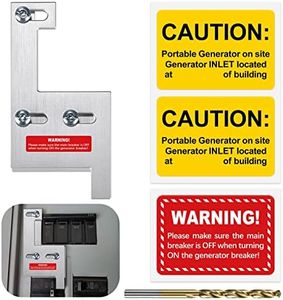
This generator interlock kit is designed specifically for General Electric single vertical throw panels with a 2 1/2 inch spacing between the main breaker and the generator breaker. Its main purpose is to enhance safety by preventing both the utility power and generator power from being on at the same time, which helps avoid dangerous backfeeding. Made from corrosion-resistant aluminum alloy, the kit is durable and built to last. The anodized surface adds electrical and heat insulation, making it safer to use.

The kit comes with everything needed for installation, including safety labels, breaker retainer straps, and a drill bit, plus a clear instruction guide. It is best suited for homeowners or professionals who already have compatible GE breaker panels and want a reliable, safe interlock solution to connect a backup generator. A minor caution is that if the interlock doesn’t fit or function properly, users should not attempt to use it and should seek support immediately. This ensures safety is maintained when integrating a generator with your home’s electrical system.

Rating
10.0
Safety Features

Most important from
206 reviews

Safety Features
It effectively prevents simultaneous utility and generator power, ensuring safe operation without risk of backfeeding.
#3

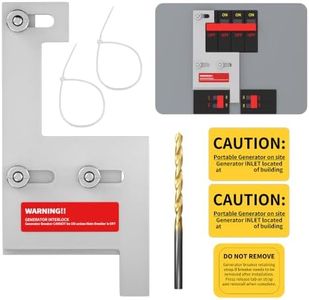
Generator Interlock Kit for General Electric GE 150 or 200 Amp Panels. 1 1/4 Inch Spacing Between Main and Branch Breakers, Generator Electrical Interlock Kit

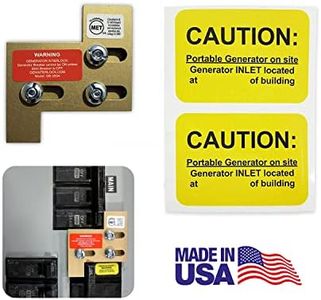
This generator interlock kit is designed to work with General Electric 150 or 200 Amp electrical panels, making it a good choice for homeowners who want a safe, cost-effective way to connect a portable generator during power outages. It prevents the main breaker and generator breaker from being on at the same time, which is a crucial safety feature to avoid backfeeding electricity into the grid—a serious hazard.

Made from anodized aluminum alloy, the kit offers good durability and resistance to corrosion and heat. Included in the package are all necessary installation parts like screws, nuts, labels, and a drill bit, which helps with a straightforward setup if you’re comfortable with basic electrical work. Since this product is not a generator but an accessory, it supports safe generator use directly without specifications like power output, noise level, or run time.

Its compatibility is limited to specific panel types and spacing, so users must ensure their panel matches before buying. This interlock kit is an ideal solution for those looking to enhance safety and compliance when hooking up a portable generator without the expense of a transfer switch, although it requires some DIY skills for installation.

Buying Guide for the Best GE Generators

Choosing the right generator can be a crucial decision, especially if you need reliable power for your home, business, or outdoor activities. Generators come in various types and sizes, and understanding the key specifications can help you make an informed choice. Here are some important factors to consider when selecting a generator.
Power Output (Wattage)Power output, measured in watts, indicates how much electricity the generator can produce. This is important because it determines what appliances and devices you can run simultaneously. Generators typically range from small portable units with 1,000-3,000 watts, suitable for basic needs like lights and small appliances, to larger units with 5,000-10,000 watts or more, which can power multiple household items or heavy-duty equipment. To pick the right one, list the devices you need to power and check their wattage requirements, then choose a generator that can handle the total load.
Fuel TypeGenerators can run on various fuels, including gasoline, diesel, propane, and natural gas. The fuel type affects the generator's efficiency, cost of operation, and availability of fuel. Gasoline generators are common and portable but may require frequent refueling. Diesel generators are more fuel-efficient and durable but can be noisier. Propane and natural gas generators offer cleaner emissions and longer shelf life for the fuel. Consider your access to fuel and the intended use of the generator when choosing the fuel type.
PortabilityPortability refers to how easy it is to move the generator. Portable generators are smaller, lighter, and often come with wheels and handles, making them ideal for outdoor activities or temporary power needs. Stationary generators are larger and fixed in place, designed for permanent installation to provide backup power to homes or businesses. If you need a generator for camping or occasional use, a portable model is likely best. For continuous or emergency home power, a stationary generator may be more suitable.
Noise LevelNoise level, measured in decibels (dB), indicates how loud the generator is during operation. This is important for comfort and compliance with local noise regulations. Generators can range from quiet models around 50-60 dB, suitable for residential areas and camping, to louder models exceeding 70 dB, which may be better suited for industrial use. Consider where you will use the generator and how much noise is acceptable in that environment.
Run TimeRun time refers to how long the generator can operate on a full tank of fuel. This is crucial for planning how often you will need to refuel, especially during extended power outages. Generators with longer run times are more convenient and require less frequent refueling. Run times can vary from a few hours to over 12 hours, depending on the generator's size and fuel efficiency. Choose a generator with a run time that matches your needs, whether for short-term use or prolonged periods.
Start TypeStart type refers to how the generator is started. Common options include manual recoil start, electric start, and automatic start. Manual recoil start requires pulling a cord, which can be physically demanding. Electric start uses a battery and is easier to operate with a push-button or key. Automatic start is typically found in standby generators and activates automatically during a power outage. Consider your preference for ease of use and convenience when selecting the start type.
Safety FeaturesSafety features are critical for preventing accidents and ensuring safe operation. Look for generators with features like overload protection, low-oil shutoff, and circuit breakers. Overload protection prevents the generator from being damaged by excessive loads. Low-oil shutoff automatically turns off the generator when oil levels are too low, preventing engine damage. Circuit breakers protect against electrical faults. Prioritize generators with robust safety features to ensure reliable and safe use.

FAQ